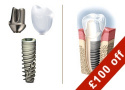
Dentures

I thought that it was worth not only to mention, but to spend some time with explaining what cosmetic dentures exactly are. This might not be the cheapest solution for tooth repair, or replacing teeth, but has definitely some vantages when it comes to dentures cost. The dentures vs. implants war is definitely won by dentures when it comes to costs, however they are far beyond as convenient as care-free implants.

So back to the facts now :) .


What is a denture?

A denture is a removable replacement for missing teeth, resembling natural gum tissue and teeth, also known as false teeth. With dentures a new smile can be achieved for people with missing teeth, giving them extended self-confidence.


What types of dentures are available?

You can have different kind of dentures, fixed dentures or removable dentures that can be a full- or partial denture, depending on your very own needs.

  • Full- or complete dentures are used when all of the teeth are missing.
  • Partial dentures are very useful to prevent other teeth from shifting position, as they only fill in the spaces between two missing teeth and by this, stably keeping them apart.


Normally, it takes about 8 to 12 weeks (some dentists recommend even longer time) to be able to place them after your gum tissue has healed.

If you choose to or need to have complete dentures, and hate to wait, you can have immediate dentures. These are inserted on the very same day, after the tooth/teeth extraction happened.  Having something to put on the -still- beading gum, might feel awkward for a lot of people, but the denture in this case, acts like a protection for the tissues, and it can even reduce bleeding – which always is an advantage. Besides, you’ll never have to appear in public without teeth!!!


When your denture becomes loose during the healing process, it might need some re-fittings by your dentist. When the healing process is over, your permanent denture is fabricated and you can keep your immediate denture as a spare one, in case you’d damage or loose your permanent one.


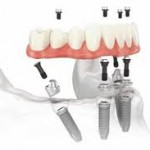
There is a an other solution available, mostly for greater stability. It is called the implant dentures. These implant supported dentures (either removable or implant fix denture)  are tightly attached to the jaws with the use of dental implants.


What is a denture made of?

Cosmetic dentures can be fabricated by variety of materials and shades. They use acrylic resin, porcelain resin or composite resin with metal or plastic wearers. Metal dentures tend to be more durable, while chrome dentures allows you to have a smaller denture in your mouth.

There is a very comfortable solution available out there, which gives you the opportunity to avoid painful rubbing against your gums. It is called flexible dentures, and right now they have one of the highest comfort levels of any dentures available. Their secret is the flexible resin coating on the outer layer of the denture base, and the fact that they are so light and thin, that you hardly feel like you are wearing them.


Denture care

In order to keep your removable dentures in place all day long, you’ll need to find something to fix them to your gum and palate with. The range of available dental fixatives is very wide, you can choose between lots of different brands, in either gel or powder format.


In case you brake or damage your denture, you must find a dental lab that does denture repairs. You must always count on an approx. cost of £60 per denture repair. Some companies offer a same-day-service, which includes examination, repair (they bond the parts together with acrylic), and shipping back to you on the very same day.

It is very important to note that attempting to repair dentures yourself with do-it-yourself denture repair kits will most likely damage your denture. Leave it to the professionals, will you!


Denture prices

The cost of dentures can pretty much vary between people, depending on their individual needs. The very best thing is to consult a cosmetic dentist you trust, but you shouldn’t hesitate to ask for a second opinion and price if you consider the costs being not reasonable.


Do you have dentures? What do you think of them? Please share your thoughts in the comment section below!

Teeth Straightening

A pleasing appearance has always been a fateful component of self-confidence. Crooked, and overlapping teeth -even if they are free from cavities- are straight off noticeable as soon as you open your mouth or smile at people.


A smile is a curve that straightens up the most.


Why straighten your teeth?

Straight teeth help you to have a correct bite, chew and speak tidily. Not only that they contribute to healthy teeth and gums, but properly aligned teeth and jaws may improve your general attitude for life.

It is important to know that properly aligned teeth:

  • collect less plaque (plaque is a sticky “film” compiled of bacteria, food and saliva, and it increases the risk of decay and gum diseases)
  • are easier to clean (no overlapping, difficult-to-reach spots in your mouth)
  • contribute to smaller risk for fracture (buckteeth are more likely to be broken in an accident)
  • avoid destruction of the bone that holds the tooth (it can happen in some cases, especially if you’ve had lived with misaligned teeth for a long time)
  • prevent abnormal wear of teeth surfaces
  • get rid of misalignment in the jaw joints, that sometimes leads to chronic headaches or pain
  • help you chew better


What teeth straightening method can I choose?
It is important to know that the method that fits you depends on the degree of misalignment and set up by your orthodontist (this is the dentist who is straightening teeth after setting up a plan for you).


Teeth straightening without braces is also an option for people who want to abstain from very visible devices in their mouths. However, dentists claim that the most effective method for straightening young people’s teeth is the usage of braces. Braces are usually quite uncomfortable in the first couple of weeks, but the majority gets used to them eventually.
  • The most usual appliances for teeth straightening purposes are braces or brackets. Brackets are usually made of silver colored metal, tooth-colored, or clear ceramic or plastic. It is important to emphasize that although clear braces are less noticeable than conventional stainless steel braces, they are not totally invisible.
  • Removable orthodontic appliances (often referred as “retainers“) hold teeth in their new positions after a teeth straightening treatment  is complete, but they can be used for moving some teeth too. They are constructed for unique needs.
  • A great selection of headgears are also used as removable correctors (not so commonly).  These help to correct conditions where the growth of the lower jaw doesn’t keep up with upper jaw growth, while other types, such as reverse pull headgear, face masks and chin cups, help when upper jaw growth does not keep up with the growth of the lower jaw. You might remember Willy Wonka’s headgear from the movie Charlie and the Chocolate Factory. :)
  • Lingual braces specially engineered brackets with wires, and are very useful for adults. It is placed on the back of the teeth, and it lets you get your teeth straightened invisibly.
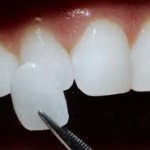
  • In some cases, and if you prefer immediate results, your dentist can cover your existing teeth with veneers to create a beautiful smile for you. To be able to do this, your teeth must be shaved in order to making room for the veneers to fit your other teeth and mouth. Being able to choose a whiter color for your veneers than your original teeth color, is an extra benefit.


  • Immediate tooth contouring or reshaping can be done without veneers too, in this case, a small amount of enamel gets removed by a drill or laser, and gets replaced with a bonding. After this, your teeth are polished for a natural look.


  • If the thought of having a mouth full of metal horrifies you, you can go for the invisible braces. These aligners are called Invisalign. Each of them  is individually manufactured for your teeth, and needs to be changed after two weeks for the next set of aligners, in order to be reaching the desired look.

It is highly important to remember, that if you have healthy, but misaligned teeth, you should not look at veneers as a primary option!


How much does teeth straightening cost?

Usually, an early problem solving costs less than the restorative dental care that may be required to treat more serious problems that can develop after the age of 30-35. It is therefore important to get right care as soon as possible, preferably before the age of 20. All these prices are only for reference, as your individual needs always need to be taken into consideration.

  • Fixed metal braces: approx. £1200 per set
  • Fixed ceramic braces: approx. £1600 per set
  • Removable retainers: approx. £100
  • Linguar braces: approx. £3500 per set
  • Invisalign treatment: starting at £2,500


Please share your experiences with braces or other kind of teeth straightening methods in the comment section below!

Root Canal Treatment

I have already written about two types of tooth sensitivity : dentinal sensitivity and pulpal sensitivity.  See my previous post about sensitive teeth.


Pulpal sensitivity is involving the pulp of the teeth, and often lead to the fact that root canal procedure must be done in order to get rid of the pain.


So, what is a root canal?

Even though our teeth look strong in the outside, the inside is pretty fragile. The inner core is full of nerve tissues and blood vessels that feed the nerve, and as soon as we reach/hurt the nerve (caused by deep decay, deep filling, or an injury to the tooth), we can experience severe pain.

So, what is root canal? It is the canal, where the nerve goes.

In some cases, even the nerve chamber becomes infected, which eventually leads  to infection with lots of pain and swollen face.

Although having a root canal surgery usually saves severely damaged teeth, there are still too many cases where root canal treatment is done needlessly, because dentists compound gum tissue abscesses with nerve abscesses.

It means that having root canal pain and swollen cheeks does not necessarily mean that a root canal is required immediately. This means that if you discover some root canal symptoms, you should always consult with your trusted dentist first, before even thinking of root canal treatment.


So, what is root canal treatment and how it is done?


A root canal surgery generally involves a complete removal of teeth nerves and dental pulp. To be able to do this, the tooth and area around the tooth are anesthetized.

Then the canals are cleaned and filled with medicine. A permanent seal or crown is put in place over the tooth.

After some weeks of healing, the permanent seal is removed, and a temporary filling is put in place. If the decay is too big, you may need a crown for your tooth.

In some (very rare) cases, the root canal filling must be redone after some years, as it can move or shrink a bit, exposing your root canal to infections.


This x-ray shows a tooth after a successful root canal treatment


The cost of root canal treatment

Be prepared that the root canal treatment cost is going to be at least triple the price of an ordinary tooth filling, in case you get it done at a private dentist. Count with approx. £380 per tooth. You can lower the root canal cost by visiting an NHS dentist in the UK.

What is NHS?

“The National Health Service or NHS is the publicly funded health-care system in England. It is both the largest and oldest single-payer health-care system in the world. In addition to the range of medical services available to legal residents and citizens of the UK, the NHS also provides free emergency care to those within UK borders, regardless of their legal status or national origin.”

Source: Wikipedia


Have you been mistreated with root canal surgery, or had any kind of complication? Did the treatment impact your life in a bad way? Please share your thoughts in the comment section below!

Sensitive Teeth

Do you believe that your mouth is healthy?

Do you think that you do not have any tooth cavities?

Why does it sometimes hurt when drinking cold liquid, eating hot or cold foods, or only breathing in cool air then???


Patients keep coming to our office complaining about sudden teeth sensitiveness, and discomfort in one or more of their teeth. They describe the pain as  sharp and sudden, which goes deep into their teeth nerves.


But, don’t worry, this condition is very common and it is treatable or manageable! Although we all try to find home remedies first, it is highly recommended to visit your dentist for a pain free dental treatment, if the pain becomes unbearable.


Usually, people start experiencing pain, when the gum begins to pull away from the teeth (and if no care taken, the roots of  the teeth) or the middle layer of a tooth (called dentin) is exposed. These exposed root tips contain small tubules that lead directly to the nerves of the teeth. Sensitive teeth causes deterioration in life quality and it makes eating or drinking a painful experience. When the gums pulled away from the teeth, the roots will be exposed to cavity too.


What can be done to start with?

  • You can change your toothpaste, especially if you are using whitening or other kind of toothpastes containing sodium pyrophosphate, as they can increase tooth sensitivity. You can buy a lot of different toothpastes, specially made for people with sensitive teeth.
  • Avoid or rinse your mouth after consuming acidic food or drinks (such as tomatoes, oranges, lemons, or sodas).
  • Apply less pressure when brushing your teeth. Buy an extra soft-bristled toothbrush, so it won’t wear down your teeth’s root surface (you may be removing tooth structure at the necks of your teeth when brushing). Check your toothbrush that you are using now: in case the bristles are pointing in multiple directions, you are pressing too much.
  • Use fluoride mouth rinse two times a day
  • Skip chemical tooth whitening as it can wear down the enamel of your teeth


It is good  to know that there are two types of tooth sensitivity: dentinal sensitivity occurs when the dentin is exposed, and this can be treated with home remedies, while pulpal sensitivity is a reaction of the tooth’s pulp, often affecting only a single tooth, and need dentist’s intervention.


What sensitive teeth treatment is recommended?

If the above mentioned home remedies are not enough, you should book an appointment at your trusted dentist where you can get pain free dentistry solutions. This is what a dentist can do for your sensitive tooth immediately.

  • special fluoride gels can be applied onto the affected teeth
  • the neck of the tooth can be sealed by putting a bonding around it, to cover any exposed dentin
  • dental laser can be used too to reduce sensitivity
  • your old fillings with cracks or leaks can be changed
  • tooth cracks can be covered with veneers
  • treat hidden cavities that you may have
  • start treatment for periodontal disease you may have (causing receding gum)
  • in case you grind your teeth, your dentist can make you a special ‘mouth guard’ to wear at night


If you are normally a nervous patient during your dental visits, you can ease now, most of these treatments are more or less pain free.


Have you ever had sensitive teeth? What did you do or what have been done to your teeth to get rid of it? Please share in the comment section below!

Lumineers

It seems to be more and more popular to get a smile makeover, as people ask for it more often during their normal dental checkups.

I guess, it is OK, as first impressions are very important nowadays, having a beautiful smile can mean “everything”. You get the guy/gal, the job you desire, or just want to stick out from the crowd and draw attention to you. :)


What is a Lumineer?

A Lumineer is a special type of ultra-thin veneer, made of special, very strong and durable porcelain as thin as contact lenses. They are often referred as contact lenses for your teeth, as they are only 0.3 mm thick, while porcelain veneers have to have at least 0.5 mm of thickness. The material they are made of a is a special patented Cerinate® porcelain.

It is quite controversial and hard to believe that it is stronger, and at the same time, much thinner than traditional veneers.

Lumineers is a permanent cosmetic solution for stains and chips, as well as slightly misaligned teeth, causing less discomfort than other kind of veneers.


When Lumineers are not recommended

Athough it all sounds very good, not everyone is a candidate for Lumineers. It is important to remember, that Lumineers mainly provide a solution for minor stains and chips, or slightly misaligned teeth. Should you have loose teeth, seriously damaged enamel, big gaps between your teeth, or desire an extreme-makeover, Lumineers may not be a solution for you. For some people, a combination of traditional veneers (allowing more flexibility) and Lumineers would be the way to go.


Advantages of Lumineers

  • the procedure is more or less painless
  • the change to the structure of teeth is minimal (only very little of your natural tooth structure needs to be shaved down before bonding them to your natural teeth)
  • if you have stained teeth, you do not have to repeat the teeth whitening procedure with time
  • you can mask tooth erosion with them
  • it can be fitted around crown and bridge work
  • if they are fitted properly, you can prevent penetration of bacteria and microorganisms, and avoid further decay
  • it is reversible
  • it is proven to last for over 20 years with proper care
  • you’ll need only two dentist appointments
  • it comes with a lifetime warranty


Drawback

I have seen/heard of patients who mentioned serious gum irritation, increased staining and plaque accumulation. By experience, I know that these can lead to gum disease or decay. Dentists and dental hygienists usually recommend throughout care-taking and oral hygiene. It is very important use floss in between the teeth, and even make sure to keep the are very clean where the lumineers meet the gum.


Bad habits affecting Lumineers

Lumineers will serve you for over 20 years, however chewing nuts and seeds, biting your fingernails nails, pens, etc. can cause damage to the Lumineers, therefore you should try to get rig of these bad habits if you want them to last long.


What to know about lumineers cost?

Lumineers are definitely more expensive than traditional veneers as they are made of a special material and manufactured by a specialized laboratory.

Lumineers UK: Expect to pay around £700 for a Lumineer veneer.

The cost can vary depending on the dentist’s level of expertise and his work charges too. Lumineers London: Check out some dentists in Harley Street, you can get great bargains there.


Are you reluctant to have any grinding done to your healthy teeth as much as I am? Would you choose Lumineers instead of traditional veneers once you have decided to do something about your smile?

Dental Bridges

Dental bridge work is usually done for older people, or when the costs need to be kept down. In every other cases crowns or implants are recommended.During my workdays, I meet a lot of puzzled patients, asking for advices.

Let’s see why. Here is some information I think you may find useful.


What is a dental bridge?

A tooth bridge is a fixed prosthetic device that is cemented onto existing adjacent teeth or implants, and can only be removed by a dentist. Dental bridges are usually recommended if you’re missing several teeth, as gaps can eventually cause bad bite, or can lead to different kind of gum diseases.

http://www.youtube.com/watch?v=63TKPAmFEoo


How is a teeth bridge installed?

The bridge dental practice happens to be as smooth and fast as an ordinary crown practice for example. After reducing (filing down) the adjacent teeth, your dentist takes an impression to provide an exact mold for your bridge teeth.

A dental laboratory then produces your bridge, using the material you desire. During that period, a temporary bridge is placed over your prepared teeth.

Dental bridges are cemented to the natural teeth or implants next to the empty space/gap. They function as anchors for the bridge.


What types of bridges can I get?

Mainly there are 3 types of dental bridges

  1. Traditional bridge (fixed): This is the most commonly used type of bridge. It is anchored to adjacent teeth or implants. These kind of bridges are not removable.
  2. Resin-bonded bridges (Maryland-bonded bridges): These are often chosen for front teeth, or when the tooth is not strong enough. In this case, the false tooth is fixed with the help of metal bands.
  3. Cantilever bridges: These are used when there you have teeth in only one side of the space. In this case, the false tooth is anchored to one or more adjacent teeth in one side.


What are these bridges made of?

You have a choice of materials for bridges. Considering the price, you can basically choose from 4 types of material:

  1. Full cast gold: this is the longest lasting of any of the laboratory-processed materials, but the color is not so nice
  2. Full cast noble: this is usually made of palladium plus silver, gold, and other trace metals. The color is silver.
  3. Porcelain Fused to Gold: where gold substructure is covered with porcelain. This looks like your own tooth.
  4. All Ceramic or All Porcelain (also mentioned as Zirconia): this is probably the nicest solution, they look very realistic.

Your dentist can always help you to decide which to use.


Bridge vs crown/implant

Generally implants need bone and space around the implant to work out fine. If the gap is much smaller than the tooth require, it’ll look terrible.

Some people simply don’t like the idea of bridging work, because it would damage the adjoining ‘good’ teeth. Usually the entire bridge needs to be replaced, in case there is a problem with any one of those teeth involved in the bridging procedure.

Dental implants help to preserve the jawbone, while under a bridge, the bone where you have the missing tooth would shrink over the years. However most of us are afraid of the complications, when placing permanent metal parts in our body.

It is really hard to make a crown look like if it is growing out of the gum, while implants do give you that illusion.

You may choose a bridge in case one of your adjacent tooth needs a crown anyway, this would save you a bit of money.

A dental bridge cost is always lower than the cost of a dental implant, as well as insurance companies don’t cover the implant costs.


How to take care of your dental bridge so it lasts long?

To prevent damage to your bridge, you should avoid chewing on hard food, ice or other hard objects, such as nails or pencils. If good oral hygiene is applied, your bridge will last a lifetime.


Do you still wonder? Please don’t hesitate to discuss your concerns with me/us in the comment section!

Dental Veneers


We discussed dental crowns last time. Although having teeth crowns seems to be a good solution if the teeth are significantly damaged by cavity or fraction, there is an other type of framework you could have in case you do not have/wish to have your teeth filed down so drastically.

This solution is called veneers.

And guess what? Dental veneers can be used to give your teeth a whole new look, and get rid of those worn-out teeth like this:


What are veneers?

Teeth veneers are unbelievably thin shells that are placed over your teeth and used to cover them, as well as to protect them from further damages. They can even cover dark spots caused by coffee-drinking. Thanks to veneers teeth can be totally reconstructed.

These instant veneers cover all the cracks, or chips and improve your overall appearance and the strength of your teeth significantly. In some cases, they use temporary veneers, which are strictly temporary (as the name indicating) coverings that are used to protect sensitive teeth.

There are so many veneers before and after pictures out here, and most of them are really impressive. Here are some:


Are you convinced already? Not?

All right, let me tell you about the different types of tooth veneers.

Mainly there are three kinds of dental veneer applications:

  1. Composite veneers: these are made of composite resins, which can both be directly built-up in your mouth or indirectly fabricated
  2. Porcelain veneers: these are indirectly fabricated and mouldered on your teeth. This is the most common practice today.
  3. Zirkon veneers: zirconia veneers consist of incredibly thin (0.2 mm) inner cores of sintered zirconia, with a porcelain layer on top of it.  It is done using CAD/CAM technology, and it is getting more and more popular.


How long do veneers last?

Manufacturers and dentists in general claim that once the tooth veneer is installed, it lasts up to 30 years, however, if you are still growing and around the age of 18-20, go for the braces! Those are giving you a lifetime effect.


How much do veneers cost?

Having veneers for teeth is not a cheap solution. The cost of veneers may vary depending on the quality and the material that is used.

The dental veneers cost usually consists of two components: cosmetic dentistry fees and the material costs.

In general, you can say that porcelain veneers cost a bit more, than composite veneers.


Tooth veneers cost is usually not covered by any kind of health insurance, so the followings should be considered.

Note that the most expensive veneers may give the same results as a bargained price veneer.  The best thing to do before deciding about your veneers, is to call some of the dental clinics, compare their prices and ask about available discounts. By this, you could end up saving a lot on your teeth veneers cost.

Right now there is a huge competition going on in UK, veneers cost uk has significantly decreased thanks to so many expeditious dentists coming and opening an office in London’s Harley street. This fact is making veneers uk and veneers london prices much lower, than the prices available in the rest of Europe.


Veneers can boost you confidence A LOT, especially if you have uneven/chipped teeth. Now it is your turn to tell me about you.

Do you have any veneered tooth? How much are veneers in your country/city? What do you think of teeth veneers prices?


Dental Crowns

There is a cheaper alternative of prosthetic dentistry than teeth implants (I talked about them in my previous post).

Here, we are going to discuss tooth crowns and tooth crown procedure in general, since there are so many people out there, not having any knowledge about these or not understanding why the dental crowns cost is so high.


What is a dental crown really and when do we need it?

A dental crown is a protecting “cap” that is bonded to a tooth that is crooked, chipped, damaged or missing (in this case it is bonded to two adjacent teeth).


Usually, we associate to something big, shiny (gold looking) and uncomfortable appliance, when we hear about  a tooth crown. :)


Something like this, yuck!


But it doesn’t have to be like that! Crowns for teeth can be pretty easy-going, as they are hardly noticeable once we are used to them. Teeth crowns don’t have to be made of shiny material, usually they install porcelain crowns as standard. To ensure perfect comfort, dentists usually install a temporary crown before the permanent crown is glues to it’s place. If more natural look is desired, a zirkon crown, or as they are usually referred to, a zirkonia crown is used, since this is not leaving any black line at the gum level, like traditional crowns.


Just like real teeth


If you prefer to have your teeth ready in one sit (with only one dentist visit needed), you can choose cerec crowns. This procedure is done in a single appointment, as the strong, tooth colored ceramic materials are applied to your teeth immediately by the dentist. In this case, be prepared to a higher dental crown cost.


Having dental crowns is significantly lowering the cost of your dental restoration, because instead of paying high cost of dental surgeries (when teeth implants are drilled into your jaw-bones), your teeth are JUST filed down, and a special dentist crown is fabricated to be bonded to it with the help of some cement or other kind of bonding material during the dental crown procedure.


This is what’s done to your teeth

  1. At your first visit, a few X-rays are taken to check the roots and surrounding bone condition. Sometimes a root canal treatment is needed before the crown is placed on your tooth.
  2. Next up, your tooth and the gum tissue around the tooth is numbed with some small injections.
  3. Then the tooth is filed down along the chewing surface and sides, in order to make room for the crown.
  4. An impression is taken of the filed tooth. These impressions are sent to a dental laboratory where the crown is manufactured, and usually back at your dentist’s within a week.
  5. Your dentist installs a temporary crown (usually made of acrylic material) using temporary cement. You can go home now.
  6. At your second visit, the dentist removes your temporary crown, and check the fit the permanent crown by placing it over your filed tooth. You are now asked to close your jaws and tell your opinion about how it feels in your mouth.
  7. If everything is found perfect, after a quick color match, your new crown is permanently cemented in place. Usually there is no need of local anesthetic here.

All this work is included, when the tooth crown cost is calculated.


The result is pretty impressive.

Please share your experiences about dental crowns in the comment section below!

Talk about Dental Implants

Let’s talk about tooth implants today, shall we?


Do you know someone who looks like this (or worse)?

This person could use a dental implant indeed.


What is a tooth implant to start with?

A dental implant is an artificial tooth root replacement that is used to support restorations that resemble a tooth or group of teeth. It is done to replace missing teeth which have been removed due to injury, disease or decay. It often allows the replaced tooth to feel and fit better, and by this people usually find it more comfortable.

Implants can be used to replace a single missing tooth, several teeth or all of them. While the cost tends to be greater, implants look and feel like your own teeth. However, not everyone can have teeth implants, your oral health and bone health status must be examined by one of those experienced dental implant dentists first.


 What can tooth implants do for you?

  • replacing one or several or your teeth without the need of filing down your adjacent teeth
  • giving support to a bridge, so you don’t have to wear removable partial denture
  • providing a more comfortable support for your denture


What kind of implants are available?

  • The root form implants are screws, inserted directly  into the jawbone, while plate form implants are narrow metal plates inserted in a similar way.


  • The subperiosteal implant is a lightweight framework that is inserted underneath the gum tissue, and sits over the jawbone, acting as a series of tooth roots.

  • There are such setups as teeth on 4  or teeth on 6 bridges, which are bridges that are supported by 4 or 6 implants, and aimed to patients who have lost all teeth or have removed them due to various reasons, such as multiple teeth fractures or gum disease.


  • Mini implants are low-cost implants, and are smaller than ordinary implants. originally they were designed to use as a temporary solution and used often for older patients.


Although your dentist often recommend them, there are some disadvantages besides the advantages of teeth implants:

Any dental implants surgery may be risky as the patient’s own bone is involved, the implant is sadistically drilled into it.

Ouch!

And now, over to a topic that is often avoided:  the dental implant cost issue…

People often choose a tooth implant because they desire to look more natural with it than with dentures or bridges, and feel more secure, allowing you to look and feel better about yourself, however they usually don’t think that the cost of dental implants is surely higher than the cost of traditional veneers or bridges. Remember, there are no such things, as cheap dental implants, if you want quality, you’ll have to pay for it. Forget about those cheapest dental implants or other kind of low cost dental implants that are being offered to you on suspicious websites. I have landed on a lot of flippant web sites when I searched on dental implant uk or dental implants london terms. I am not going to point them out here, but we should always double check on dentists offering teeth implants uk, offering prices that are much lower, than the usual prices.  Scroll down to the bottom of this page, for some approximately price information.

In UK dental implants cost usually less than in the US, since there are so many skillful and well educated dentists moving to London from Eastern-European countries, offering cheap dental implants uk.

These, more affordable dental implants are usually of very good quality, and the reason why they are cheaper is the fast that they are cutting their operative costs.

The teeth implants cost for all on 4 and all on 6 installations are usually around £12,000 each for the upper and the lower jaw. However, the tooth implants cost can be cut by getting your teeth implants on NHS. But we shouldn’t forget, that NHS implants are available for people with a clear medical need. This applies to people who have experienced teeth or face damage by an accident or through something as bad as mouth cancer (Gosh!). Only these people can get dental implants NHS, while others must pay big money for them.


Some general dental implants cost UK

Dental consultation fees: around £50

Bone grafting: £400 to £3,000 (highly depending on the procedure needed)

Gum grafting: £400 to £500 per site

Single Root Form Implant:  £900 – £1,400


Ouch again! :)


Tell me, if you find the costs too high too!


Fear of the dentist

Fear of “the dentist” is pretty common. If you’ve had bad experiences with dentists in the past, it is very easy to make the assumption that dentists, in general, are bad people. There’s a theory called “construct theory”, which states that we have a tendency to ascribe certain attributes to a group of people who have something in common (in this case, dentists), based on our experiences of this group. However, these constructs (e. g. “evil” as opposed to “kind”, “bad” as opposed to “good” and so on) tend to be based on a very small number of observations.
Even if you’ve had the misfortune of running into 10 dentists, none of whom was particularly kind and caring, and two or three of them who were downright horrible, this does not mean that ALL dentists conform to this “pattern”. It simply means that you were incredibly unlucky in the past. Join the club!
Anyway, you’ll get the drift: there’s no such thing as “the dentist”, just as there’s no such thing as “the teacher” (there’s good and bad ones).
It may seem implausible, but there are a lot of caring and gentle dentists around (you’ll meet some of them on this site). The only potential difficulty is finding them! But more about that later…
Being afraid of “the dentist” as a person is often the result of past cold, uncaring, downright mean or abusive behaviour on behalf of dentists you may have encountered. You may fear things like hurtful remarks about the state of your teeth and your oral hygiene, “the dentist” inflicting pain and not caring/not stopping, or being treated as a set of teeth rather than as a person.
Few people look forward to a spell in the dentist’s chair. But serious anxiety prevents millions of Americans from seeking proper preventative care. The consequences of this problem may go far beyond dental pain or lost teeth. Gum disease is a serious infection that can affect other parts of the body. Studies now link it to illnesses including heart disease, stroke, and diabetes.
Fortunately, many dentists are specially trained in handling fearful patients; a variety of methods and treatments are available to reduce pain and alleviate fear in the dentist’s chair.
Still, even if your mind tells you you’ll be just fine, your body may still fear that dentist’s chair. Here are a few tips that may help you overcome your fear of the dentist:

  • Go to that first visit with someone you trust, such as a close relative who has no fear of dentists. Some specialists even encourage friends and relatives to sit with the patient during treatment.
  • Seek distraction while in the dentist’s chair. Listen to your own music on headphones. A new CD, not one you’ve heard a lot, so you’ll be a little more interested in it. Or find a dentist with a TV or other distractions available in the treatment room.
  • Try relaxation techniques. Taking a big breath, holding it, and letting it out very slowly, like you are a leaky tire. This will slow your heartbeat and relax your muscles. Another technique is progressive muscle relaxation, which involves tensing and relaxing different muscle groups in turn.
  • Review with your dentist which sedatives are available or appropriate. Options include local anesthetic, nitrous oxide (“laughing gas”), oral sedatives, and intravenous sedation. While oversedation can be dangerous, too many dentists are uncomfortable using any oral sedation. And only some dentists are qualified to perform IV sedation.

If you can’t bring yourself to go to any dentist, you might want to try seeing a psychologist first. The most “tried and true approach” to treating dental phobia (and other phobias) is the thing “direct therapeutic exposure.” It involves introducing the patient to feared items – say, a needle – in a gradual and controlled manner.